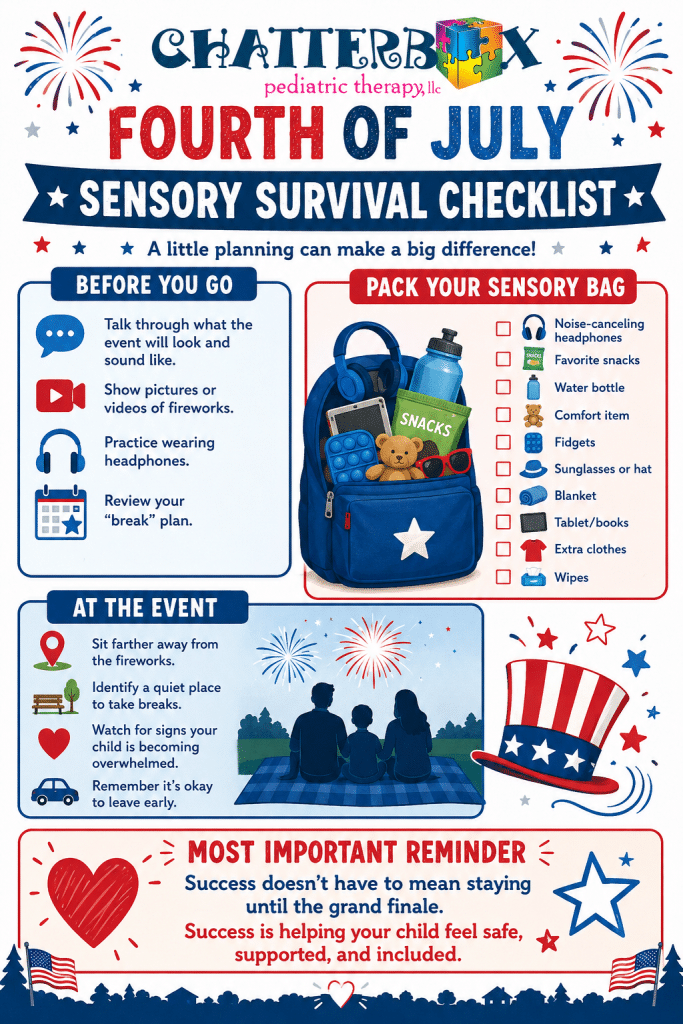
Bonus: There’s a free graphic checklist you can save after reading this post to help you feel even more prepared!
If you’re the parent of a child who struggles with loud noises, crowded spaces, or unexpected changes, the Fourth of July can bring a mix of excitement…and anxiety.
Maybe you’re wondering:
“Should we even try to go?”
“What if the fireworks scare them?”
“What if everyone else is having fun and my child just wants to leave?”
If those thoughts have crossed your mind, you’re not alone.
The good news?
A little preparation can go a long way—and sometimes the best holiday memories come from making small adjustments that help your child feel safe and successful.
First, remember this…
Your child isn’t being “difficult.”
Their nervous system may simply be working overtime.
Think about everything happening at a typical Fourth of July celebration:
- Loud fireworks
- Crowds of people
- Bright flashing lights
- Music
- Unfamiliar foods
- Staying up later than usual
- Heat and humidity
- Long periods of waiting before the fireworks even begin
That’s a lot for any child.
For children with sensory sensitivities, autism, ADHD, anxiety, or sensory processing challenges, it can be overwhelming.
Before You Go: Set Everyone Up for Success
One of the best things you can do is prepare your child for what they’ll experience.
Instead of saying,
“We’re going to watch fireworks tonight!”
Try talking through the evening step by step.
For example:
“First we’ll eat dinner. Then we’ll drive to the park. There will probably be lots of people there. We’ll spread out our blanket. It may be noisy. When it gets dark, you’ll hear some really loud booms and see bright lights in the sky. If it feels too loud, we can wear your headphones or take a break.”
Knowing what to expect often makes the unexpected feel much less scary.
If your child benefits from visuals, consider showing pictures or videos of fireworks ahead of time so they know what they’ll look and sound like.
Pack a “Just in Case” Bag
Even if you never need it, having a sensory toolkit can help everyone feel more confident.
Here are a few family favorites:
✔️ Noise-canceling headphones or ear defenders
✔️ Sunglasses or a hat if bright lights are overwhelming
✔️ Favorite comfort item or stuffed animal
✔️ Fidget toys
✔️ Favorite snacks
✔️ Water bottle
✔️ Wet wipes
✔️ Small blanket
✔️ Tablet or preferred calming activity
✔️ Extra change of clothes (especially for younger children)
✔️ Any medications your child may need
Think of this bag as your “peace of mind” kit—not a sign that you’re expecting things to go wrong.
Choose Your Spot Carefully
You don’t have to sit front row.
In fact, sitting farther away often means:
- Less noise
- More personal space
- Easier access to your car
- A quicker exit if your child needs a break
Sometimes the best view isn’t the closest one.
Have an Exit Plan Before You Need One
One of the easiest ways to reduce stress is knowing you can leave.
Before you even get out of the car, decide:
- Where can we take a quiet break?
- Who will walk with our child if they need to leave?
- Is it okay if we don’t stay for the entire fireworks show?
Giving yourself permission to leave early often makes it easier to stay longer.
Practice Coping Strategies Before the Big Night
Don’t wait until the first firework goes off to introduce calming tools.
Practice ahead of time:
- Taking deep breaths together
- Asking for a break
- Wearing headphones
- Squeezing a stress ball
- Taking a walk when things feel overwhelming
The more familiar these strategies are, the easier they’ll be to use when emotions are running high.
Watch for Early Signs
Children often tell us they’re becoming overwhelmed long before they have a meltdown—but not always with words.
You might notice:
- Covering their ears
- Hiding behind you
- Becoming unusually quiet
- Pacing
- Increased movement
- Crying more easily
- Asking to leave
- Becoming clingy
These aren’t signs of failure.
They’re signs that your child is communicating, “I need some help.”
Responding early is often much easier than waiting until they’re completely overwhelmed.
Remember: It’s Okay to Change the Plan
Maybe your child watches one firework and says they’re done.
Maybe you watch from the car.
Maybe you skip the community celebration altogether and light glow sticks in the backyard.
Maybe your child spends most of the evening wearing headphones.
That’s okay.
The goal isn’t to make your child enjoy fireworks.
The goal is to help them feel safe, supported, and included in a way that works for them.
Your Fourth of July Doesn’t Have to Look Like Everyone Else’s
Social media can make it seem like every family is sitting on a picnic blanket watching fireworks with smiling children.
Real life often looks different.
And that’s okay.
Sometimes success is making it through the parade.
Sometimes it’s watching fireworks from the driveway.
Sometimes it’s deciding that this year, staying home is exactly what your child needs.
There is no prize for pushing through an experience that’s simply too overwhelming.
The best holiday memories aren’t made by following someone else’s plan.
They’re made by meeting your child where they are.
And that’s something worth celebrating.
From all of us at Chatterbox Pediatric Therapy, we hope your family has a safe, joyful, and memorable Fourth of July—whatever that looks like for you.
(Feel free to save this checklist below!)


Leave a Reply