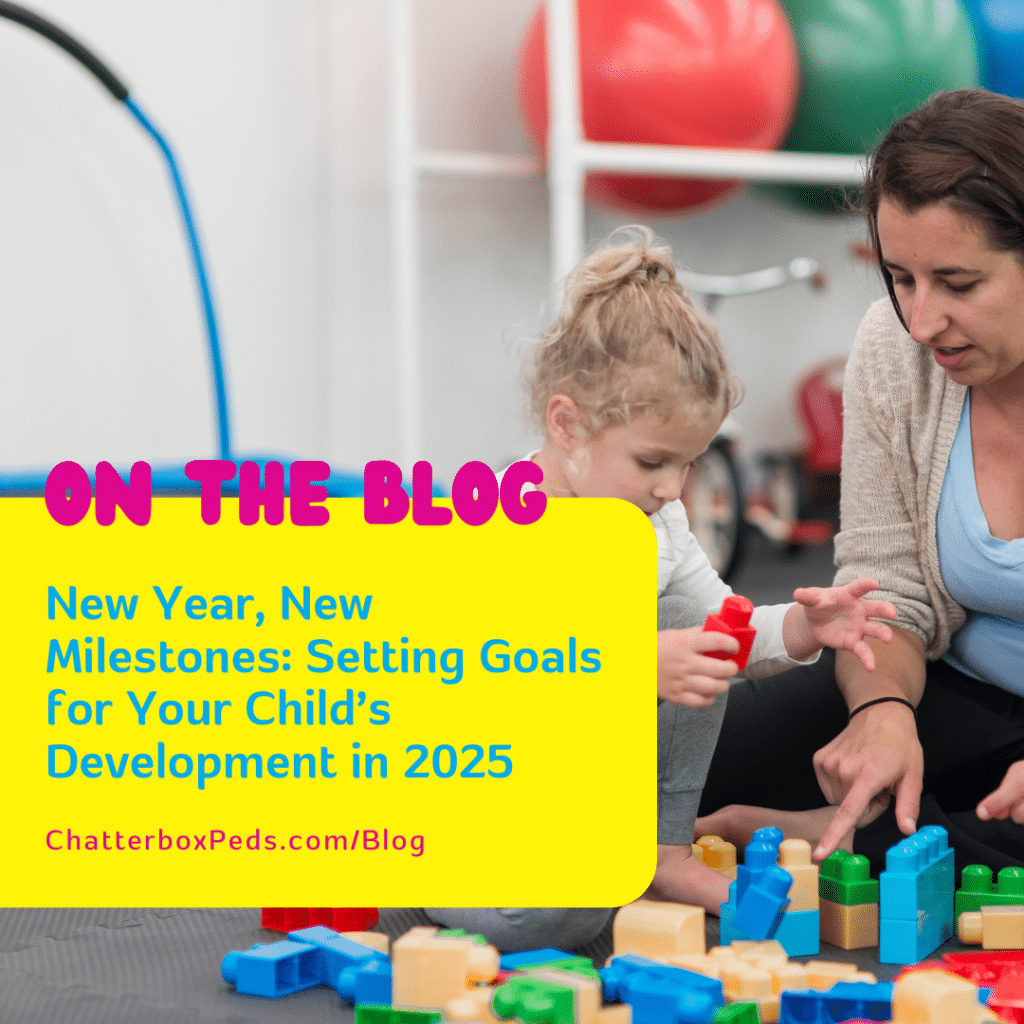
As the new year begins, it’s the perfect opportunity to refocus on your child’s developmental milestones. Whether it’s improving speech and language skills, fine motor coordination, or sensory regulation, setting specific, actionable goals can make all the difference. At Chatterbox Pediatric Therapy, we’re passionate about empowering families to help their children thrive in every area of development.
Why Setting Goals Matters
Developmental goals provide a roadmap for your child’s progress. They ensure that everyone involved—parents, therapists, and educators—works collaboratively toward measurable outcomes. Without clear goals, it’s challenging to track growth, identify areas of concern, or celebrate successes.
For example, if your child is working on language skills, a vague goal like “talk more” might feel overwhelming and lack direction. Instead, focusing on learning five new words related to their favorite activities can make the process more manageable and rewarding.
How to Set Effective Developmental Goals
Here are some tips for setting meaningful and realistic goals:
- Be Specific: Focus on concrete skills your child needs to develop. For instance, instead of saying, “Improve motor skills,” try, “Learn to button shirts independently within three months.”
- Make Them Measurable: Use quantifiable benchmarks to assess progress. A goal like “Practice speech articulation with 10 flashcards daily” provides a clear structure.
- Stay Realistic: While it’s great to aim high, setting goals too far beyond your child’s current abilities can lead to frustration. A realistic goal ensures they feel successful along the way.
- Celebrate Small Wins: Every step forward is worth celebrating. Progress is often gradual, so recognizing small victories builds confidence and keeps motivation high.
- Collaborate with Professionals: Therapists can provide expert insights and tailor goals to your child’s unique developmental stage.
Examples of Developmental Goals
Need inspiration? Here are a few examples of goals that are both specific and achievable:
- Improve hand strength by practicing cutting shapes with scissors twice a week.
- Learn and use three new functional phrases during meals, such as “More juice, please.”
- Participate in 10 minutes of sensory play each day to regulate emotions.
How Chatterbox Pediatric Therapy Can Help
At Chatterbox Pediatric Therapy, we specialize in creating individualized plans tailored to each child’s unique needs. Whether your child is just beginning their therapeutic journey or looking to build on previous progress, we’re here to support you every step of the way.
This year, let’s work together to help your child unlock their full potential. Contact us today to schedule an evaluation or discuss your child’s goals for 2025.



Leave a Reply