Physical Therapy
If you have concerns regarding your child’s gross motor, fine motor or sensory integration skills, contact Chatterbox Pediatric Therapy to schedule an evaluation.
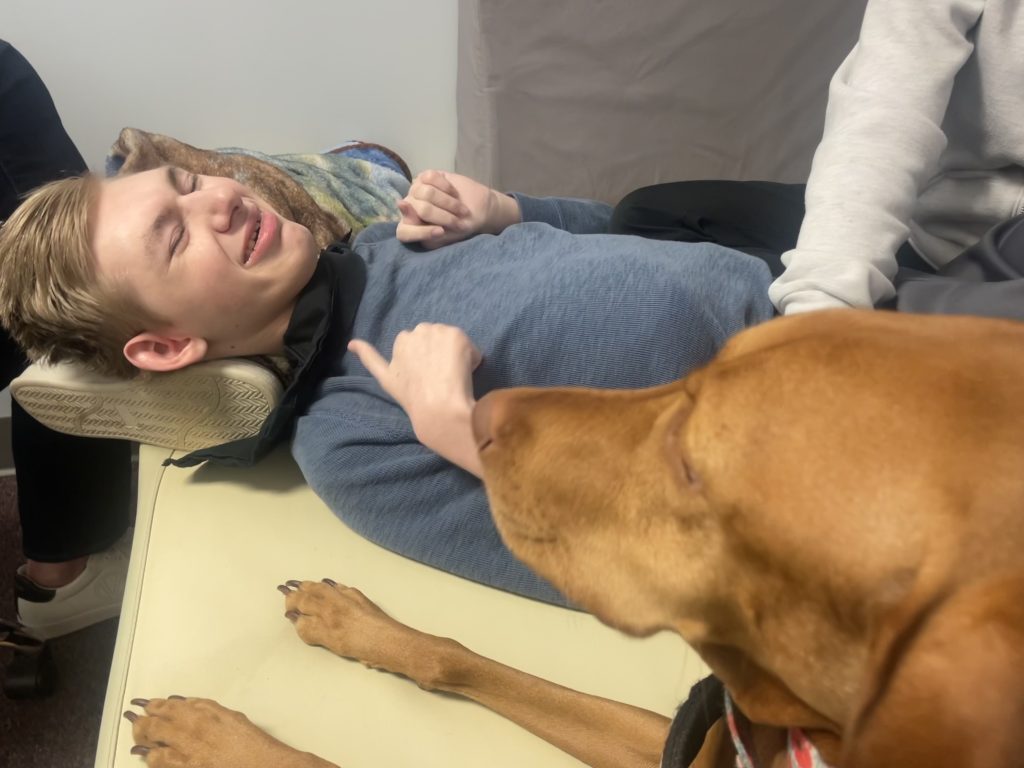
Pediatric physical therapy helps improve motor skills, strength, balance, endurance, and coordination in children from infancy to young adulthood (up to age 21). Pediatric physical therapists (PTs) treat conditions affecting movement, development, and orthopedics in young, developing bodies.
Pediatric PTs work with children and their families to help each child achieve their maximum potential for independent function and active participation at home, school, and in the community. They are experts in movement, motor development, and body function, using their skills to assess, diagnose, and treat children, youth, and young adults. They also promote health and wellness, collaborating with families, communities, and other specialists.
Services provided by pediatric PTs include:
- Developmental activities
- Movement and mobility training
- Strengthening exercises
- Motor learning techniques
- Balance and coordination improvement
- Recreation, play, and leisure activities
- Daily care activities and routines
- Equipment design, fabrication, and fitting
- Tone management
- Assistive technology
- Posture, positioning, and lifting techniques
- Orthotics and prosthetics
- Burn and wound care
- Cardiopulmonary endurance training
- Pain management
- Safety, health promotion, and prevention programs
The Following Are General Indicators That A Child May Benefit From A Physical Therapy Evaluation:
- Increased muscle stiffness and tightness
- Limitations in range of motion
- Delays in developmental milestones
- Muscle weakness
- Postural abnormalities/ asymmetries
- Poor balance skills
- Uncoordinated movements
- Difficulty in sports activities such as catching, throwing and kicking
- Delays in age-appropriate gross motor skills
Wheelchair Seating Clinic
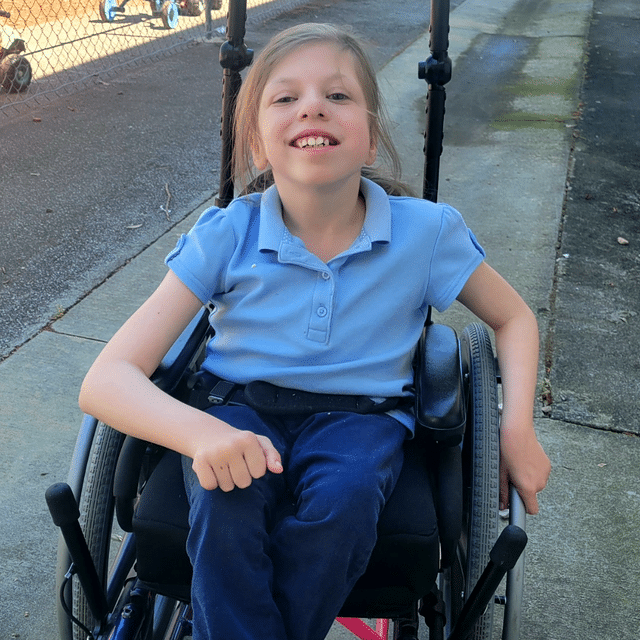
The Wheelchair Seating Clinic at Chatterbox evaluates mobility equipment for children, teens and young adults, from birth to age twenty-one. The therapist and venders assess your child’sindividual positioning and equipment needs including but not limited to adaptive strollers and wheelchairs. This team approach ensures that the child receives the most appropriate equipment for his or her individual needs. The selection of the correct size and style of equipment is critical for proper positioning, digestion, breathing, efficient mobility and prevention of skin problems. A child usually qualifies for a new wheelchair every five years therefore the chair must be able to grow with the child.
Wheelchair Seating Clinic Includes:
- Adaptive strollers, manual, and power wheelchairs
- Seating products (cushions, back supports, trunk and extremity support)
- lternative ways to drive a power wheelchair (breath support, head control, speciality switches)
- Individualized fitting to ensure fit, function, and satisfaction with fit and function with delivery of mobility device.
- Client and caregiver training and education in technology use, maintenance and warranty coverage
- Vender contact information provided for warranty service and follow up questions

By 2 to 3 Months Of Age
GROSS / FINE MOTOR
- Lifts head 45 degrees while in prone (lying on tummy)
- Opens and closes hands
- Follows a toy with eyes from side to side
- Brings hands together toward middle of body
- Attempts to reach for toy
- Grasps a small toy placed in hand
- Breastfeeds or drinks from a bottle without choking, coughing or gagging

By 4 to 6 Months
GROSS / FINE MOTOR
- Rolls belly to back (both to right and left sides)
- Hits at dangling toys with hands
- Lifts head to 90 degrees while in prone (lying on tummy)
- Raises entire chest when on stomach and bears weight on hands
- Rolls back to belly (both to right and left sides)
By 6 Months - Begins to sit using hands for support
- Transfers toys from hand to hand
- Reaches with increased control for a toy
- Shakes and bangs toys
- Eats small amounts of pureed baby food

By 7 to 12 Months
GROSS / FINE MOTOR
- Sustained sitting without using their arms for support
- Crawls on hands and knees with stomach off the floor (9 months)
- Feeds self finger foods (8 months+)
- Moves into sitting position independently
- Eats mashed table food
- Sits well to play
- Imitates simple play such as “peek a boo”
- Pulls self up to stand using furniture
12 Months to 24 Months

GROSS / FINE MOTOR
- Pulls off socks and shoes
- Cooperates with dressing (helps to pull off clothing; extends arms and legs to assist with dressing)
- Scribbles on paper
- Stands alone
- Walking (1-2 steps alone)
- Uses thumb and pointer finger to pick up small objects (15 Months)
- Eats a variety of soft, chopped table food
- Drinks from a sippy cup independently
- Stacks 2 blocks
- Walks well with infrequent falls
- Squats to pick up an object and stands up again without falling
- Throws/kicks balls
- Eats a variety of solid foods

2yrs To 4yrs
- Snips with scissors
- Imitates horizontal, vertical lines and circular marks
- Removes elastic waist pants
- Builds at least a 6 block tower
- Pushes, pulls or carries toys while walking (18 months)
- Pedals a tricycle
- Catches a large ball thrown gently from very close
- Runs well without falling (2.5 years)
- Drinks from an open cup

3yrs To 4yrs
GROSS / FINE MOTOR
- Static tripod grasp (held with thumb, index and middle fingers while hand moves as a unit)

4yrs To 5yrs
GROSS / FINE MOTOR
- Static tripod grasp (held with thumb, index and middle fingers while hand moves as a unit)
- Prints name from memory
- Colors within the lines
- Draws a person with at least 6 or more different parts
- Cuts out a square
5yrs to 6yrs
- Dynamic tripod grasp (held with thumb, index and middle fingers with ring and pinky curled into palm; movement of writing utensil comes from the fingertips)
- Throws at a target 5 feet away and hits target fairly consistently
- Copies letters and numbers
- Skips independently
- Rides a bicycle independently
References:
Beery, K.E. & Beery, N.A. (2010). The Beery-Buktenica developmental test of visual- motor integration(Beery VMI) with supplemental developmental tests of visual perception and motor coordination and stepping stones age norms from birth to age six: Administration , scoring, and teaching manual (6th ed.). Bloomington, MN: Pearson.
Case-Smith, J. (2005) Occupational therapy for children (5th ed.). St. Louis, MO: Elsevier, Inc.
Haley, S.M., Coster, W.J., Ludlow, L.H., Haltiwanger, J., & Andrellos, P. (1992). Pediatric evaluation of disability inventory (PEDI): Development, standardization and administration manual (Version 1.0). Boston, MA: PEDI Research Group.
Miller, L.J. (2006). Sensational kids: Hope and help for children with sensory processing disorder (SPD). New York, NY: G.P. Putnam’s Sons.
Reebye, P. & Stalker, A. (2008). Understanding regulation disorders of sensory processing in children: Management strategies for parents and professionals. Philadelphia, PA: Jessica Kingsley Publishers.
Williamson, G.G. & Anzalone, M.E. (2001). Sensory integration and self-regulation in infants and toddlers: Helping very young children interact with their environment. Washington, D.C.: Zero to Three.